

What Judges Wish You Knew
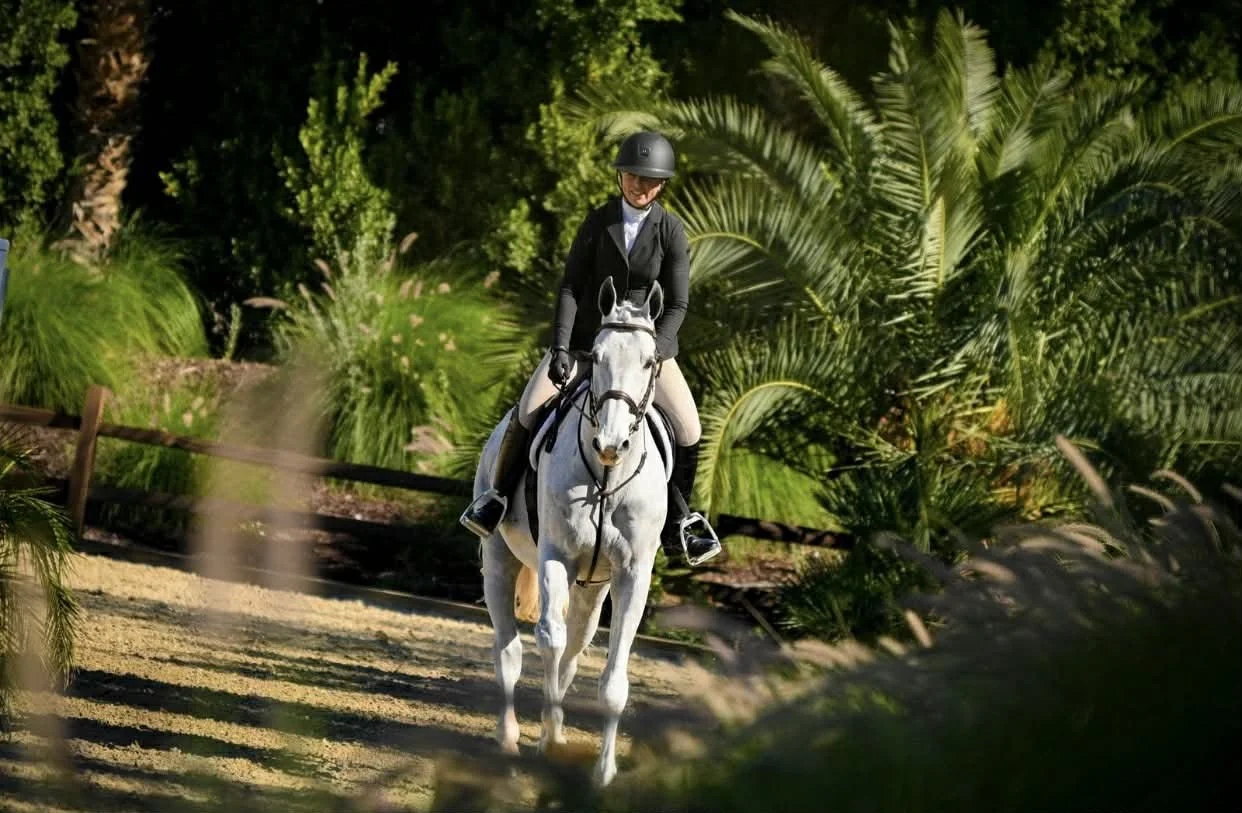
Beyond the clipboard and radio lies a complex, fast-moving job. Licensed officials share insights into their role, responsibilities and how exhibitors can better understand what’s happening in the judge’s box.
Riders and trainers frequently complain about judges and judging, but unless we’re a judge ourselves, do we really understand what it’s like to sit in the box for 10 hours or more watching round after round? Do we know the stress of having to decide a score in a split second, make sure the stagger is correct, inadvertently miss a mistake in a round and have a competitor complain—either to the U.S. Equestrian Federation or publicly on social media? Or what if a prominent trainer just simply doesn’t agree with the judge and decides to contest the placings?
What is it really like to sit in the judge’s box? What are the stresses, the gratifications, and the pet peeves of being a judge? I asked a group of USEF R-rated Hunter and Hunter/Jumping Seat Equitation judges to tell me what they wanted competitors to know about their jobs and their experiences. My hope in writing this piece is that more understanding on the part of competitors will generate more compassion for those who choose to offer their time and expertise in the judge’s box.
Overall, I was struck by the fact that all the judges I spoke with said similar things. In addition, they were all thoughtful, generous with their time, and eager to share their experiences with me. As a competitor myself, I came away more educated, compassionate, and excited about showing.
The first question I asked, “What do you want exhibitors to know about being in the box?” And all five responded the same: “We are pulling for you. We want you to have a great round.”
William Sparks, a veteran judge from New Orleans, Louisiana, noted, “It’s much easier—and more fun—to judge great rounds. I want people to know that judges are their cheerleaders.”
Amy Owen Center, a trainer and judge from Monticello, Florida, agreed, “I’m hoping that every rider comes in and wows me.”
“Every time someone walks into the ring, and especially if they’ve struggled in the first trip, we’re hoping that they can work it out in the second,” said Tricia Booker, from Mount Pleasant, South Carolina, who has judged for more than 30 years. “We always want to see the horse and rider do their best.”
In addition, the judge’s job—even for someone very experienced—is a stressful one, requiring exquisite organization and concentration. Sparks described in detail his color- coded system of keeping organized when several cards (classes) are open at once.
“I don’t claim to be the best judge, but I always show up. I do my best to pay attention to everything,” said Sparks, his passion for the job, and his dedication, evident. He added that “99 percent of us try to do our best. If I spill my coffee in my lap, or have to look down for a second, I always give the rider the benefit of the doubt. It doesn’t occur often, but sometimes things happen, and we miss something.”
All the judges mentioned that wind, weather, coffee mishaps, and miscommunication with the starter can distract a judge for a moment.
“We don’t want to make a mistake,” Booker agreed. With horse after horse entering the ring, she remains focused on her job—making sure her stagger is correct and paying careful attention to each rider’s entry, trot circle and exit, often with little time between rounds. It’s an exciting job but also mentally taxing.
Several other judges mentioned that now, with rounds being livestreamed at the larger competitions, there’s even more pressure on judges to get it right. And, if you do make a mistake, sometimes it ends up in a nasty post on social media.
The overall message? Know that judges try very hard to get it right, but remember that judges are human, too.
Judge and clinician Robert Crandall, of Wellington, Florida, elaborated on the stresses of judging, especially in championship classes when using the open numerical system: “You’re often judging 50, 100 or more rounds in a class, and given a split second to score each of them. And, if you’re judging with someone else, you also have to quickly come to an agreement. Then, for the rest of the class, you’re locked into that score. There’s pressure to get it right.”
Crandall, along with several other judges, also noted that open numerical scoring itself has created tensions. “People get temperamental about scores; it’s hard for them to understand that a score is a reflection of the judge’s impression of the round in that moment from one vantage point,” said Crandall. “The score should not be taken personally.”
All the judges remarked that they believe open numerical scores are currently overused and that riders become fixated on the numbers rather than knowing that scores are relative—they are a way of organizing the rounds in a class.
“If the first rider goes in and has a decent round, and I give it an 82, then all subsequent rounds are judged relative to that one. It may be that the 82 is my winner, but perhaps not—it all depends on the relative quality of the rounds,” said Center.
All the judges noted that having to announce scores locks them into a placing and doesn’t allow for flexibility. “Sometimes you decide halfway through a class that you liked the second one [that went in the class] better than the ones that came afterward. But, if you’ve thrown a score, you can’t go back and revise,” noted Sparks.
Riders also should remember that the judge’s perspective is unique—it’s one view, from one spot, and they work without any history or emotion. For example, the judge has no idea what it took to get that particular horse to the ring that day, or if that rider coming into the arena fell off in the warm-up ring, or that this is the horse’s first show back in six months.
“I often hear riders say, ‘that judge doesn’t like me,’ but that’s simply untrue,” said Crandall. “Most of the time we don’t know who’s coming in the ring, and we don’t have time to think about it either.”
All of the judges I spoke with agreed that competitors would benefit from more education and observation. They suggested that riders spend time watching entire classes from one spot outside of the ring, and all the better if they can sit near the judge’s booth for the same viewpoint. They also suggested that trainers need to take a more active role in educating themselves and their clients.
“I encourage trainers to take a couple of hours on a not-so-busy day for them and sit in the bleachers and watch—the whole barn, parents, too,” said judge Andrea Wells, who is co- chair of the USHJA Officials Education Committee. “It’s their responsibility to seek understanding of the ‘subjective’ sport they are choosing to be involved in. If I liked football, I would want to learn more about it, such as the plays, terminology, standards, etc. This approach also teaches clients to be better sports, take their ‘licks’ with more acceptance and understanding, and learn that the ups and downs of a sport don’t solely come from the people in the booth.”
Center added, “When you sit and watch round after round, you get a sense of the levels of quality. In addition, competitors need to understand that where you sit influences what you can and cannot see, with foliage, decorations and even solid jump standards sometimes interrupting the judge’s view of the horse in the ring.
Sparks noted that the last time he judged the Platinum Performance/USHJA International Hunter Derby Championships in Kentucky, his location gave him and his judging partner a clear view of a jump that the two other panels could only see from behind. It was a fence that quite a few horses had trouble with, and his panel often ended up giving the lowest scores of the three. “It wasn’t that we wanted to throw low scores, it’s just that we could see that jump better from where we sat,” he said.
The judges also noted that there’s a newer kind of pressure nowadays, from both trainers and competitors, given the increasing costs, not just on leasing and purchasing horses but also on showing. The huge investment of money, time and energy has raised the stakes in the show ring, creating more pressure in the environment, and that includes for the judge.
But sometimes extraordinary horses don’t perform extraordinarily on a given day, and judges are always judging what’s in front of them that day, not potential or past performances.
Lastly, I asked: “What advice do you have for us exhibitors? Is there anything that we riders can do to make your job be easier—besides having a great round?”
Several judges recommended that riders watch more rounds in general and observe the best riders in particular. One judge told me, “No one really watches anymore. They watch their own rounds, and then they’re on their phones. Watch a whole class from our vantage point and be sure to watch the best.”
All of the judges said that they appreciate classes that run in a timely manner and riders who are organized. It’s deflating when a gate has been open for a long time and someone shows up, and their trainer has to teach them the course—when the same class has been going for hours already. Or, when it’s the end of the class and one rider has the last three horses. Lateness, open gates and long delays irritate most judges, especially at the end of a long day. Some conflicts and delays can’t be avoided and are understood, but other times the lateness feels disrespectful. “Be organized! Walk in the ring and get to showing your horse,” said Sparks.